
Quick answer
What the Ohtani region treasure hunt search is asking
The query Treasure Hunt Ohtani Region usually means the player already suspects Ohtani, but still needs a reliable way to narrow the active clue. The useful answer is not a permanent pin copied from an old video. It is a short verification path: confirm the exact clue, treat Ohtani as the map boundary, match the strongest landmark, and check the approach road before widening the search.
Start with the clue shown in your own session. Record the wording, the current Festival Playlist or season, the reward car, and any action that must happen before the chest objective becomes available. A route can look convincing while belonging to a different reset. Keeping those four pieces together prevents an old Ohtani route from being presented as the current FH6 Treasure Hunt location.
This is an independent player guide, not an official Forza, Xbox, Microsoft, Playground Games, or Turn 10 Studios route page. The official link below is game-world context only. The active clue, objective state, and completion result in the player's session remain the final evidence for a live route.
Search boundary
How to read an Ohtani clue without searching the whole map
A regional clue normally mixes four kinds of information. Ohtani reduces the map. A physical noun such as bridge, rail, field, tunnel, tower, road, slope, or overlook identifies something that can be checked. Terrain words describe the surrounding scene, while direction words explain how to approach it. Do not turn every word into a separate destination; first ask which landmark explains the clue as a whole.
Choose the strongest physical noun before looking for decorative details. If the clue mentions a rail line and open ground, look for a rail landmark inside the Ohtani boundary whose nearby terrain also fits. If it mentions a road relationship, compare the access road and direction of travel. A matching object outside Ohtani is weaker than a complete, slightly less obvious match inside the named region.
Search snippets and video titles often remove the reset date, reward, or prerequisite action. They are useful for recognizing a landscape pattern, but they are not enough to prove a current FH6 Treasure Hunt Ohtani Region route. Keep the clue, season, reward, and confirmation status in your notes so a useful historical lead remains clearly labeled.
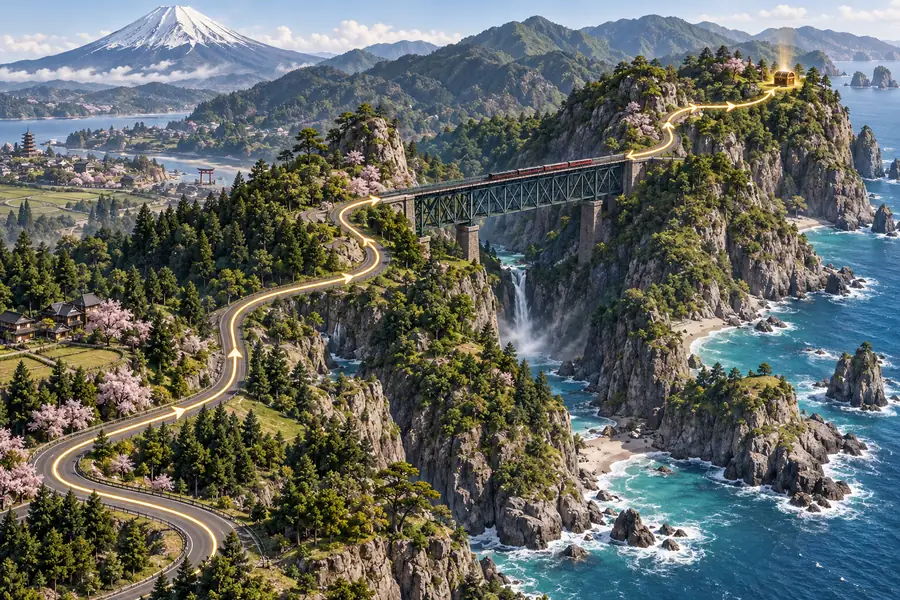
Evidence table
Match the clue to an Ohtani route before driving
Use the table as a filter, not as a substitute for the in-game objective. A candidate should collect several independent signals: the region boundary, the physical landmark, the terrain around it, the approach road, and the current reward or action. If only one signal matches, keep it as a lead rather than calling it the Treasure Hunt Ohtani Region location.
This evidence-first approach also explains why the page is separate from the current answer hub, the general Regions directory, and the Treasure Chest guide. Those pages answer broader or different questions. This page is for players who already have Ohtani in mind and need a repeatable method for checking a regional candidate.
| Signal | What it proves | Next check |
|---|---|---|
| Ohtani region | A practical map boundary | Keep candidate landmarks inside the region |
| Exact clue | The physical language of the hunt | Underline the strongest object or terrain |
| Approach road | Whether the arrival path fits | Compare direction, turns, and road shape |
| Season or playlist | Which answer set is relevant | Check the active reset context |
| Reward and action | A completion cross-check | Confirm the objective in-game |
Route workflow
Five steps to verify a Treasure Hunt Ohtani Region route
First, copy the clue exactly. Preserve action words because a short verb can change the task from finding a chest to completing a prerequisite challenge. Add the visible season or Festival Playlist, reset date if available, reward, region name, and current objective status. This small record is more dependable than a search result that has lost its context.
Second, split the clue into boundary, landmark, terrain, and approach. Ohtani is the boundary. The strongest physical noun is the landmark. Field, hill, coast, snow, forest, or open space is supporting terrain. Words such as under, past, beside, north, or near describe the approach. This turns a vague sentence into a shortlist instead of a full-map drive.
Third, compare negative evidence. A candidate should lose priority when it has the right object but no matching road, no compatible terrain, no active objective, or no plausible direction of arrival. Negative evidence matters because many landmarks look similar in a screenshot. Rejecting a bad match early is faster than widening the route every time a familiar image appears.
Fourth, test the shortest plausible approach in the game and record what changes. Check whether the objective is active, whether the clue action completes, and whether the reward context agrees. Fifth, label the result current, unconfirmed, or historical. That label is the simplest protection against turning a previous Ohtani answer into a permanent coordinate.
Landmark checks
Use approach roads and negative evidence together
Rail and bridge clues are stronger when the track, bridge deck, surrounding terrain, and access road form the same relationship described by the hint. A hill or overlook clue should also match the direction of travel and elevation change. An open field is supporting evidence, not permission to search every empty patch of ground in Ohtani. Keep asking which area explains the largest number of words with the fewest exceptions.
The approach is often the missing part of an online answer. A screenshot may show the landmark but not the road used to reach it, the final turn, or the prerequisite action. Note the practical road, the last clear landmark, and the direction from which the player arrived. These notes make a route repeatable without claiming that an unofficial guide has an official permanent coordinate.
Community videos and guide pages can help you recognize a landmark, especially when they show the route from the driver's viewpoint. Check the upload date, named season, reward, and clue before following them. If those details are missing, classify the media as a visual reference for a route pattern. Do not treat an undated title as proof of the current Treasure Hunt Ohtani Region location.
Current versus archive
When an Ohtani answer is current and when it is historical
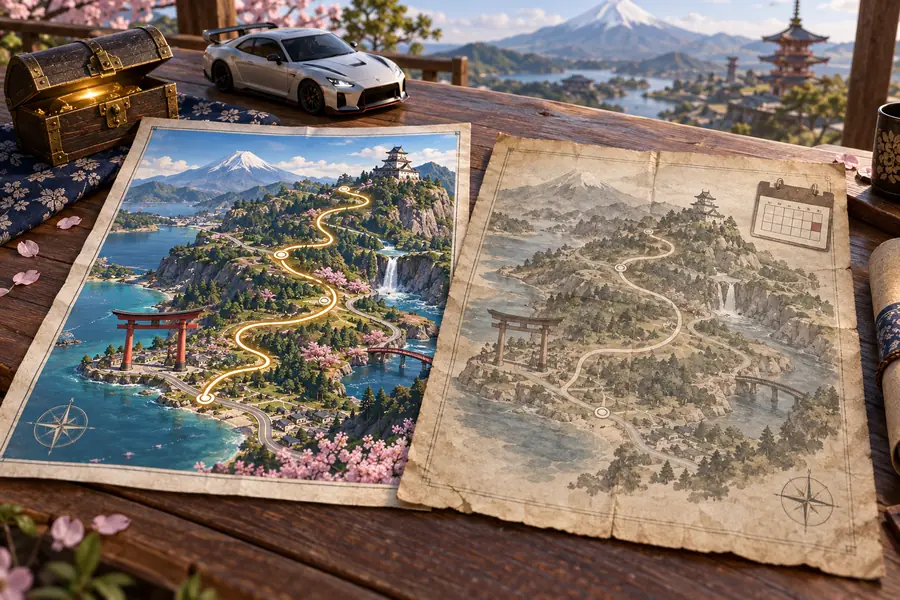
A current Ohtani answer should have a visible clue, an active playlist or reset context, a plausible regional boundary, and an in-game confirmation state. An archived answer can still be valuable when it keeps its season, reward, clue wording, date, and confirmation status. If one of those fields is missing, treat the route as a lead rather than a verified historical record.
Use the Current FH6 Treasure Hunt page when the query asks for this week's location. Use Regions when you want a directory or broad comparison. Use Archive when you are checking an older seasonal route. Use the Treasure Chest guide when the real question is how to read a landmark clue or complete the final chest action. The Ohtani guide sits between those resources: it explains the region-specific verification workflow without taking ownership of every weekly answer.
After a playlist reset, re-check the clue before reusing your notes. A changed reward or action can signal that an older route is no longer active. A short log with date, season, region, clue, route evidence, and confirmation status makes future corrections easier and keeps the page useful even when the exact active location changes.
Scope and source
What this FH6 Ohtani guide can and cannot confirm
This guide can explain how to narrow an Ohtani search, compare landmarks, record negative evidence, and decide whether a route belongs on the current page or in the archive. It cannot provide an official permanent coordinate for every future Festival Playlist. Time-sensitive objectives must be checked in the player's own session.
The official Forza playlist link is included for seasonal game-world context, not as evidence of a permanent Ohtani Treasure Hunt route. The feature art is official context. The two in-body route visuals are newly generated explanatory illustrations, not gameplay screenshots or official maps; a dated community route video is listed as a visual reference and is not presented as official. All important instructions appear as crawlable HTML text around the images.
If you send a correction, include the region, season or playlist, exact clue, reward, approach road, and whether the objective was confirmed. Do not send account credentials. A dated correction with an evidence trail is more useful than a bare coordinate copied from an undated video.
Checklist
Five FH6 Treasure Hunt Ohtani checks
- Copy the active clue, season or playlist, reward, region, and reset context.
- Separate Ohtani as the boundary from the landmark, terrain, and approach words.
- Shortlist roads and landmarks that explain the complete clue, not just one visual detail.
- Reject candidates with mismatched terrain, access roads, season, reward, or inactive objectives.
- Confirm the action in-game and label the note current, unconfirmed, or historical.
FAQ
Treasure Hunt Ohtani Region FAQ
Is the Treasure Hunt Ohtani Region location permanent?
No. Ohtani can remain a useful map boundary while the active clue, playlist, reward, and objective change. Confirm the current clue in-game before treating a route as live.
What should I do if an Ohtani route matches a screenshot but not the clue?
Treat it as an unconfirmed or historical visual reference. Compare the exact clue, season, reward, approach road, and active objective before widening the search.
Does Ohtani Region mean every landmark there is a Treasure Hunt answer?
No. The region narrows the map, but the physical landmark and its relationship to the clue still need to match. Use negative evidence to reject roads or terrain that do not fit.
Can I use a video for a Treasure Hunt Ohtani Region location?
A dated video can help you recognize a landmark or approach. Check its season, reward, upload date, and clue; an undated title does not prove the current route.
Where should a confirmed older Ohtani route go?
Keep the season, date, clue, reward, and confirmation status together in the Archive. The Current page should carry the active answer, while this guide explains the region-first method.
Official context
- Forza official playlist page - Official seasonal context; it is not a permanent Ohtani route source.
- Community Ohtani route video - Community visual reference checked for an Ohtani route; verify its season and clue before following it.