
Quick answer
What the Ito Region Treasure Hunt FH6 search is asking
The query Ito Region Treasure Hunt FH6 is a region-first location search. The player usually suspects Ito already, but still needs to turn a clue into a small, testable route instead of scanning the whole Japan map. Start with the exact clue in your own game, then compare the named landmark, the surrounding terrain, the approach road, and the active reward or objective.
Ito is a useful boundary, not a permanent answer. A coast, railway, bridge, field, lookout, or hillside can appear in more than one attractive screenshot. The strongest candidate is the place that explains the whole clue with the fewest exceptions. If the region matches but the clue action, season, reward, or approach does not, keep the route unconfirmed.
This is an independent player guide, not an official Forza, Xbox, Microsoft, Playground Games, or Turn 10 Studios route page. The official links below provide game-world context only. For a live answer, the clue, playlist state, objective, and completion result in your own session are stronger evidence than an undated title or recycled map marker.
Search boundary
How to read an Ito clue without driving every road
Split the clue into four jobs: region, landmark, terrain, and approach. Ito gives you the map boundary. A noun such as bridge, rail, coast, field, tunnel, tower, road, or overlook identifies something you can check. Terrain words explain the setting, while words such as beyond, beside, under, north, or near describe how the player should arrive.
Choose the most distinctive physical object first. If the clue mentions a bridge and open ground, look for an Ito bridge whose nearby field, water, rail line, and access road also fit. If it mentions the coast and a road, compare the direction of arrival and the height of the road rather than accepting any shoreline image. A good match narrows the search; it does not merely make the map look familiar.
Search snippets, short videos, and community posts often remove the season, reward, reset date, or prerequisite action. They are useful for recognizing a landmark, but they do not prove that the route is active today. Save the clue, region, playlist, reward, source date, and confirmation status together so that a later correction does not turn an old Ito route into a false current answer.
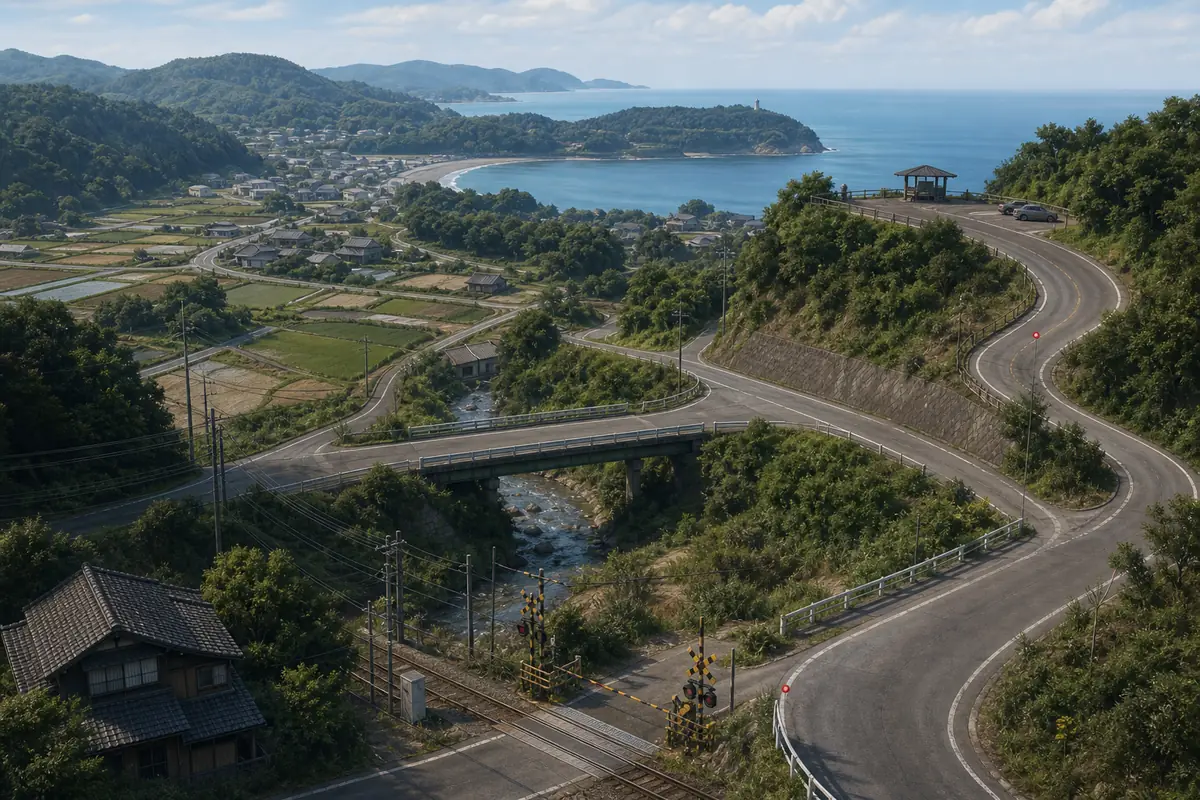
Evidence table
Match the clue to an Ito route before driving
Use the table as a filter for an Ito Region Treasure Hunt FH6 candidate. It is deliberately conservative: a region name can remove most of the map, but it cannot confirm the final road by itself. Remove candidates that rely on one attractive landmark while ignoring the clue's terrain, approach, season, or objective.
A useful note records both positive and negative evidence. Write down why a bridge fits, but also why the neighboring road does not. This keeps the Ito guide distinct from the current answer page, the broad Regions directory, the Treasure Chest explanation, and the Festival Playlist archive. Those pages answer related searches; this page explains how to verify the Ito-specific route boundary.
| Signal | What it confirms | What to check next |
|---|---|---|
| Ito region | A practical map boundary | Keep candidate landmarks inside Ito |
| Exact clue | The physical language of the hunt | Underline the strongest noun and action |
| Coast, rail, bridge, or field | A visual relationship to test | Compare terrain and nearby landmarks |
| Approach road | Whether the route is repeatable | Check arrival direction and final turn |
| Playlist, reward, and objective | Whether the note is current | Confirm the active state in-game |
Route workflow
A five-step way to verify an Ito Treasure Hunt route
First, copy the clue exactly as it appears. Keep its action words because finding a landmark and completing a task are not always the same step. Add the active Festival Playlist season, reset context, reward, region, and objective state. This small record is more reliable than a search result that has been stripped of its date.
Second, mark Ito as the boundary and separate the clue into landmark, terrain, and approach. The most specific noun should produce a shortlist. The terrain should support it. The approach should explain how the driver reaches it. If the three layers disagree, lower the candidate even when one screenshot looks convincing.
Third, compare negative evidence. Reject a road when its bridge has no nearby rail line described by the clue, when a coastal road approaches from the wrong side, or when a field or hillside cannot be reached from the stated direction. Negative evidence stops the search from expanding every time a player finds another similar landscape.
Fourth, test the shortest plausible route in the game. Check the clue action, objective marker, reward context, and completion state. Fifth, label the result current, unconfirmed, or historical. The label matters because a route can remain visually useful after a playlist reset while no longer being the answer a player needs today.
Landmark combinations
Use Ito roads, coast, rail, and negative evidence together
Rail and bridge clues are stronger when the track, bridge deck, stream, and access road form the same relationship described by the hint. A coast clue should also agree with the road's direction and the surrounding elevation. A field is supporting terrain, not proof that every open patch in Ito is relevant. Ask which single area explains the largest number of words at once.
The approach road is often missing from online answers. A crop may show a bridge but not the final turn, the direction of travel, the nearby rail crossing, or the action that unlocks the objective. Note the nearest practical road and the last visible landmark, but do not turn an editorial route note into an official coordinate claim.
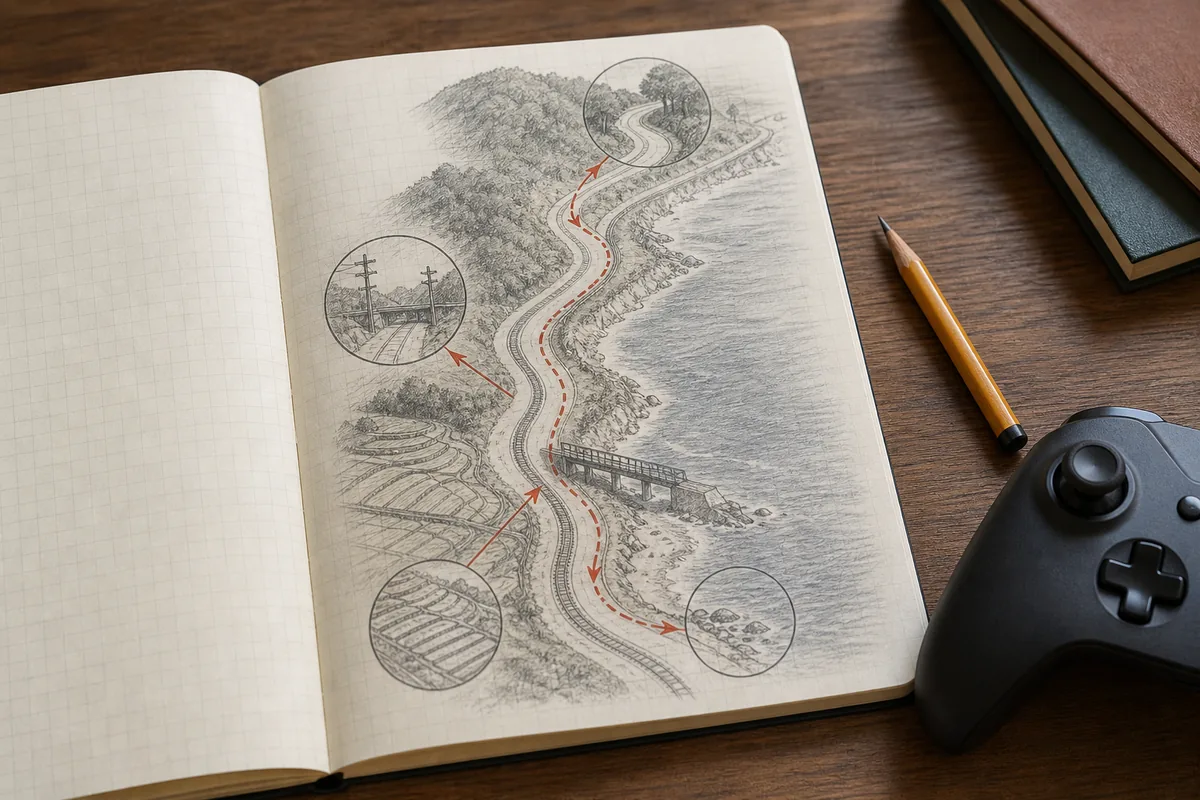
Community video or screenshot evidence can help identify a place when it is dated and tied to a clue. Check the upload date, season, reward, and visible objective. If those signals are missing, describe the media as a route-pattern reference. Do not present community material as official or treat a generated illustration on this page as gameplay.
Current versus archive
When an Ito answer is current and when it is historical
A current route should have a visible clue, an active playlist or reset context, a plausible Ito boundary, and an in-game confirmation state. An archived route can still be valuable, but it should retain its season, reward, clue wording, date, and source type. Without those fields, keep it as a research lead rather than a verified old answer.
Use the Current page when the search simply asks where this week's Treasure Hunt is. Use Regions for a broad map directory and Archive for an older seasonal record. Use the Treasure Chest guide when the question is how to interpret a chest clue or perform the final action. This Ito page covers the narrower regional verification decision between those resources.
After a reset, check the clue before reusing notes. A changed reward or action can show that a familiar road is no longer active. Keep a short log with date, season, region, clue, reward, and confirmation status so that the site can correct a route without silently overwriting useful history.
Scope and source
What this Ito guide can and cannot confirm
This guide can explain how to narrow an Ito search, compare landmarks, record negative evidence, and decide whether a route belongs on the current page or in the archive. It cannot promise a permanent coordinate for every future Festival Playlist. Time-sensitive objectives must be checked in the player's own game session.
The official Forza and Xbox links provide product and game-world context, not a permanent Ito Treasure Hunt database. The feature image is official key art used for context. The two body visuals are AI-generated explanatory illustrations, clearly labeled as non-gameplay and non-official-map assets. The actual guidance remains available as crawlable HTML text.
For a correction, include the Ito region, season or playlist, exact clue, reward, approach road, source date, and whether the objective was confirmed in-game. Do not send account credentials. A dated evidence trail is more useful than a bare coordinate copied from an undated video.
Checklist
Five Ito Treasure Hunt checks
- Copy the active clue, season or playlist, reward, Ito region, and objective state.
- Separate the region boundary from the landmark, terrain, action, and approach words.
- Shortlist roads that explain the complete clue, not just one familiar screenshot detail.
- Reject candidates with mismatched terrain, approach direction, reward, season, or objective.
- Confirm the action in-game and label the note current, unconfirmed, or historical.
FAQ
Ito Region Treasure Hunt FH6 FAQ
Is an Ito Treasure Hunt route permanent?
No. Ito is a useful map boundary, but clues, rewards, objectives, and Festival Playlist context can change. Confirm the current clue and completion state in-game before treating a route as live.
What if an Ito route matches a screenshot but not my clue?
Keep it as an unconfirmed or historical visual reference. Compare the exact clue, season, reward, approach road, and active objective before widening the search or publishing it as current.
Does Ito region mean every coast or railway landmark is the answer?
No. The region narrows the map, while the clue must still match the physical relationship between landmark, terrain, and approach. Use negative evidence to reject attractive but incomplete matches.
Should I use a video for an Ito Region Treasure Hunt FH6 search?
A dated video can help you recognize a landmark or approach. Check its season, reward, clue, and upload date; an undated title is not proof of the current route.
Where should a confirmed older Ito route go?
Keep the season, date, clue, reward, source, and confirmation status together in Archive. The Current page should carry the active answer, while this guide explains the Ito-specific checking method.
Official game context
- Forza Horizon 6 official page - Official game-world and product context; it is not a permanent Ito route source.
- Xbox: Forza Horizon 6 - Official product context; it does not verify the route markers described in this guide.